Naval officer. Stanford engineer. Army-trained psychiatrist. Andrew's path here was anything but direct — and that's exactly why it works.
Most psychiatrists follow a straight line: college, medical school, residency, practice. Andrew's path had a few more turns.
He started at the United States Naval Academy, where he studied physics and spent four years in an environment that shaped how he thinks about discipline, leadership, and what people are capable of under pressure. After graduating, he served twelve years as a Naval officer — an experience that gave him an unusual understanding of high-performance environments, organizational stress, and the particular toll that sustained excellence takes on the people inside those systems.
It also gave him something else: certainty that he wanted to work with people, not systems.
Andrew left the Navy and completed post-baccalaureate studies at Harvard before earning his medical degree at Tufts University School of Medicine. In between, he earned a graduate degree in Mechanical Engineering and Art at Stanford University, where he studied Design Thinking at the d.school — the program that pioneered the methodology now used by organizations from Apple to the Mayo Clinic.
That combination — the design thinker's instinct to start with the person, not the diagnosis — is what makes his clinical work feel different from most psychiatric care. He listens for what's working before he looks at what isn't. He builds treatment around your life, not around a protocol.
After medical school, Andrew was selected for psychiatric residency at Tripler Army Medical Center in Honolulu — the only civilian chosen for a military program. There, he specialized in trauma and traumatic brain injury, working with active-duty service members and veterans dealing with some of the most complex presentations of PTSD in clinical medicine. That residency gave him a depth of trauma training that most private-practice psychiatrists and therapists in San Francisco simply don't have.
Before opening his own practice, Andrew held positions at UCSF, the San Francisco VA, Stanford, and St. Mary's Medical Center. He also spent time at IDEO and Jump Associates — two of the world's leading design and strategy consultancies — where he applied design thinking to healthcare innovation. He has taught at Stanford, UC Berkeley, Tokyo University, and for the American Psychiatric Association and the American Medical Association.
He left those institutions because he wanted to practice medicine the way he believes it should be practiced: one patient at a time, without the constraints of insurance formularies, fifteen-minute appointments, or institutional bureaucracy.
Read more about his philosophy →At his daughter's kindergarten celebration, something shifted in how Andrew understood his work — and what every patient deserves to hear. He wrote about it. It remains the clearest expression of the conviction underneath everything he does in the room.
(Not My Kindergarten)
Actually, I don't even remember my kindergarten or that I even went to one. I lived in India until I was six, and honestly I think they just started sending us to school right out of the gate. I'm talking about my daughter's kindergarten.
When she was turning five, her teacher invited us to a small celebration they were having at the school. As part of the festivities the teacher sat all the little kiddos down for story time. As they waited, wrapped in anticipation, she began a cute little birth story about my daughter Ayden. "Before she was born, Ayden was sitting up in heaven," she recounted, "imagining what her life would be like. She imagined her parents…" And the story kept going. As she spoke, something odd occurred to me — there was nothing about my daughter in the story. In fact, if she simply replaced "Ayden" with anyone else's name, it would be an equally valid story about their birth.
For those of you that knew her back then, you know that she had these amazing long golden wavy locks (her mom and I always wondered where they came from). She was (and is) a pretty amazing girl — but her hair was something everyone noticed, and even strangers would come up to us to comment on. But there was nothing about those locks in her story.
Odd. I thought to myself, well… what if she didn't have that beautiful hair, would I still love her?
Yes, of course!
What if she had ugly hair (whatever that is), would I still love her? Yes! Without doubt! What if she was bald? Yes!
There was nothing in the story about her smile. We had affectionately come to call her super-powered alter ego "EVIL GRIN" — because when she wore that beautiful and devilish smile, you knew she was cooking up something truly mischievous! She of course had other ones, but that one was certainly noteworthy. But nothing about her smile!
The same thoughts crossed my mind. What if she didn't have any of her charming smiles, would I still love her? Yes, of course! What if she had ugly teeth and a crooked smile? Would I still love her? Yes. What if she was toothless? Yes! In fact for much of her early years we wondered if she was ever going to get a full set of teeth.
What if she wasn't athletic? Yes. What if she was handicapped? Yes. What if she wasn't smart? Would I still love her? Yes. What if she was mentally disabled? Yes.
In fact there wasn't a condition that I could come up with that would change that I loved her, or that I believed she deserved to be loved. It was then that I realized something really important. None of it was important! She was inherently worthy of being loved! We use all these adjectives to describe the people we love, as if somehow those qualities made them lovable — or worthy of love. But they really aren't important.
There it was staring at me plain as day… We are all inherently deserving of being loved. There is nothing we need to do, or even can do to make us more deserving of love. Equally important is that there is nothing we can do to make us less deserving of love.
As a physics major, my mind of course turned to a simple physics concept to help me really digest the enormity of this revelation. (Yes, that is my nerd flag proudly flying.) In order to get a particle, even the tiniest of particles, to travel fast — close to the speed of light fast — we have to push on it with a lot of force. The closer to the speed of light we get, the bigger the force required, until finally to get it to the speed of light, it takes an infinite force. Basically, it's impossible! But photons — light particles — are already traveling at the speed of light. They don't need any external force. In fact, an external force can't make them go any faster, or slower for that matter.
So you might be wondering how this relates?
In short, if you think that being worthy of love comes from accomplishments, attributes, or external validation — no amount of it will ever be enough. If on the other hand you understand that you are already perfectly lovable, you know that there is nothing you need to do or even can do to increase (or decrease) that. This was an especially profound revelation for someone — namely me — who had spent his entire life trying to be perfect in order to be good enough and worthy of being loved.
I hope this simple message reaches you in the manner it was intended.
I wish you all the best in your journey.
Andrew Chacko, MD
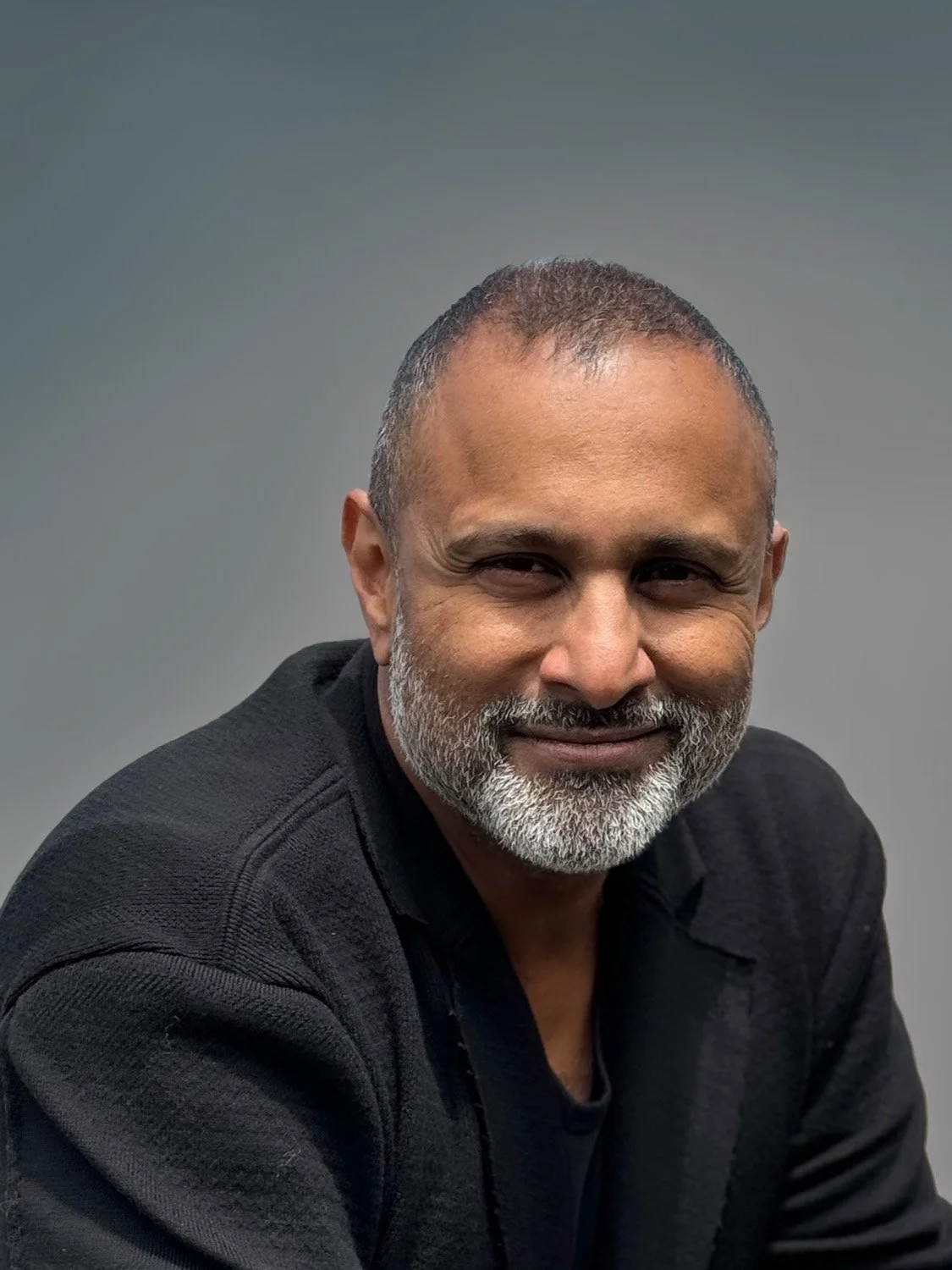
Andrew is both a board-certified psychiatrist and a practicing therapist — which means therapy and medication management happen in the same room, with the same person, within one ongoing clinical relationship. No referrals to a separate therapist. No coordination between providers who have never met each other. No gaps.
This model is uncommon. Most psychiatrists have moved toward medication-only appointments — fifteen minutes, adjust the dosage, see you next month. And most therapists can't prescribe. The result is a fragmented system where two providers each have half the picture and neither has the whole patient.
Andrew rejected that model deliberately. He believes the therapeutic relationship is the foundation of every good outcome — and that relationship gets richer over time, not shallower. The person who knows your patterns, your history, your family dynamics, and your strengths should be the same person making decisions about your medication.
He draws on a wide range of evidence-based modalities — EMDR, hypnosis, mindfulness, somatic therapies, and behavioral approaches — selecting what fits the patient, not what fits a protocol.
His practice is deliberately small. He sees fewer patients than most psychiatrists, which means longer sessions, genuine continuity, and the ability to respond when something changes in your life — not three weeks from now, but this week.
He is an out-of-network provider. That's a conscious choice: it means he's never constrained by what an insurance company considers appropriate care. He provides a superbill after each session — a detailed receipt you submit to your insurer. Most patients with PPO plans receive 50–80% of fees reimbursed. More on fees and insurance →
Andrew is a Fellow of the American Psychiatric Association (FAPA) and a Diplomate of the American Board of Psychiatry and Neurology. He is licensed to practice medicine in California and sees patients in person at his Pacific Heights office and via telehealth throughout the state.
Andrew is an accomplished woodworker, painter, and graphic designer whose work has been exhibited and sold. He is a competitive dancer who has won dance competitions and holds a Zumba instructor certification. He is a certified military parachutist and rescue diver. He has studied French, Spanish, and Japanese, and has taught in some form — from classrooms to conference stages to workshop floors — since high school.
He lives in San Francisco with his family. His biggest passion, outside of his patients, is drawing out human potential — in any room, in any context, in anyone willing to do the work.
Andrew is accepting new patients in San Francisco. Most are seen within 1–2 weeks. A complimentary phone call — no paperwork, no commitment — is where it starts.